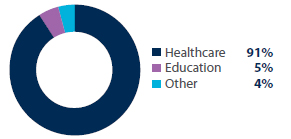
REALISING CAPITAL OUTCOMES
Social and Relationship capital
Social and Relationship capital
Adcock Ingram has at the heart of its strategy a clearly defined stakeholder engagement approach, which is ultimately the responsibility of management. As a pharmaceutical manufacturing company, we act at all times with integrity and transparency, and promote open communication with our stakeholders.
Operating in an ever-changing environment, we refine our approach in order to sustain a respectful and mutually beneficial relationship with our stakeholders. Our autonomous operating divisions operate on a model that allows them flexibility while remaining accountable and responsible for their relevant stakeholder groups. At the core of our business model underpinned by our strategic pillars, we focus on our customers and consumers, employees, communities, partners, suppliers and service providers, shareholders and the investor community, industry bodies, the media, regulatory authorities and government. Our stakeholder-centric approach enables our business to remain competitive, and ensures that we make a meaningful contribution to society at large in South Africa. A policy that articulates and gives effect to the direction on stakeholder relationship is in the process of being finalised.
| Stakeholder group |
Stakeholder needs and expectations | Stakeholder contribution to value creation |
Means of engagement with stakeholders | |
| Customers and consumers | Consistent supply of safe, quality, efficacious and affordable products that are available in appropriate channels. Ethical, factual and professional interactions with healthcare practitioners. Maintaining and improving our service delivery levels. Be a business partner to our customers and provide support in order for them to operate sustainable businesses. Implement development programs to support previously disadvantaged individuals who operate in the pharmaceutical sector. |
Through service delivery, a top priority of the business, is one of the ways to ensure brand loyalty and trust to grow the business. Customers provide extensive footprint through their expansion initiatives. Cash and carry customers ensure our brands get expanded into the informal markets. Prescribers of our products, support brand loyalty |
Personal visits to customers by sales personnel, managers and executives. Other interactions include continuing professional education; customer surveys; a customer call centre; advertising; the corporate website; consumer focus groups and education campaigns. |
|
| Employees | Employees expect a stimulating and gratifying work environment, with prospects of career growth, including:
|
A well-motivated employee base, acting in accordance with the values of Adcock Ingram, forms the foundation of our success as an organisation. We will continue to make sure that our employees take pride in the Company's contribution to society. |
Communication via plasma screens and newsletters. The Adcock Ingram intranet contains relevant news as well as policies and procedures. Training and development initiatives. Site management/shop steward meetings, site forum employment equity meetings, trustee meetings and conferences. |
|
| Regulatory authorities and government | Participation, influence and contribution towards the pharmaceutical sector to remain sustainable and continue to serve the healthcare needs of South Africa. Compliance with all applicable legislation and regulations. Growth and social upliftment of the communities in which we operate. |
The regulatory body provides us our license to operate and manufacture in line with a regulatory framework. We will supply quality and affordable medicines in order to promotes access to medicines for the benefit of society. Adcock Ingram will support investment in South Africa, as well as empowerment, transformation and CSR (Corporate Social Responsibility) initiatives. |
Proactive government relations engagement strategies are in place at executive and Board level, for dialogue with relevant Departments at national, provincial and local government levels as well as the South African Pharmacy Council. Regular engagement with the regulatory body (SAHPRA) is key to facilitate efficient product registration and compliance in all aspects, including manufacturing. |
|
| Communities | Ongoing commitment and support towards projects considering the interests and needs of the communities in which we operate. |
Interaction with the communities affords us an opportunity to understand and contribute to their needs. |
Interaction through the Company's corporate social initiatives as well as various initiatives undertaken by each operating division. |
|
| Shareholders, investor community and analysts | Open and transparent in communication. Implement our business strategy and structure the business optimally for sustainable returns whilst managing risk, identify growth opportunities and have good governance practices. Keep up to date on the organisation's financial and operational performance. |
Shareholders are encouraged to attend Adcock Ingram's annual general meeting and to directly discuss relevant issues with management. |
We communicate regularly through the Johannesburg Stock Exchange (JSE), press releases, telephonic and face-to-face meetings. |
|
| Multinational partners and licensors | Building their brands utilising our marketing expertise, and sales and distribution network which offers a flexible service on a national basis through our significant critical mass and reach with healthcare professionals. Achievement of commercial goals; alignment with international best practice standards for product promotion and regulatory adherence. |
Partnerships are embedded with marketing and distribution agreements on established brands. Allows the Company to enter or expand into therapeutic categories. |
Regular commercial reviews with partners. Combined attendance and promotion at conferences and congresses to share best practice with relevant parties. |
|
| Suppliers and service providers | Conduct business in an open, honest and transparent manner that is mutually beneficial and sustainable, including timeous payments and fair terms. |
By providing good quality raw materials and finished products in line with pharmaceutical standards, in a timely manner assist in avoiding stock outs of products. Suppliers aligned to the country's B-BBEE imperatives and also focus on emerging enterprises and black women owned businesses, assist Adcock Ingram with its focus areas of transformation. |
Supplier relationship management is implemented through personal contact and consistent interaction at operational and management levels. |
|
| Industry bodies | Membership and participation to contribute towards an industry viewpoint and response on regulatory issues and health policy. |
Influence policies that create a sustainable local manufacturing pharmaceutical industry and serve the healthcare needs of South Africa. Keep abreast of regulatory and industry issues so that the Company can have a relevant position on matters. |
Membership and participation in: Pharmaceuticals Made in South Africa (PHARMISA); Self Medication Association of South Africa (SMASA); the Pharmaceutical Task Group (PTG) and the Marketing Code Authority (MCA). |
|
| Media | Good corporate citizenship through transparent and responsible reporting and disclosure. |
The media contributes in sustaining our brand reputation and increase awareness of new products, industry development and regulatory challenges. |
Press releases, media interviews and reactive responses, and SENS announcements. |
Adcock Ingram is committed to economic transformation to address the issues of access, empowerment, inequality and poverty eradication. The business units have rolled out the following programs geared to drive transformation, make it meaningful within the business whilst supporting the communities and responsible corporate citizenship.
Owner-driver scheme
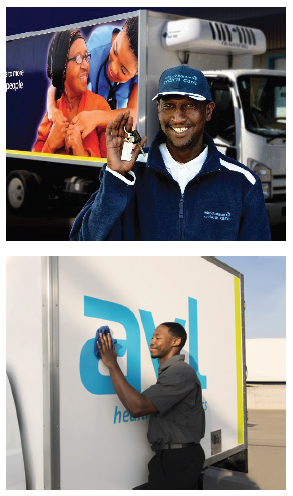
Nature of the Project
Launched in 2012 to enable promising drivers to own a business and help the Company achieve its Enterprise Development objectives.
Targeted beneficiaries
Previously disadvantaged people, including employees of Adcock Ingram.
Purpose of the project
Empowerment of previously disadvantaged people, including employees, to own and sustain a business whilst improving the existing fleet and improve on customer service.
Progress to date
The scheme is fully operational in 10 of the 13 distribution centers. There is a total of 39 directors, owning 116 vehicles. 232 permanent jobs have been created and to date a total investment of R70 million has been made by the Company.
Next Steps
- Roll out the scheme to the two new depots in East London and Kimberley.
- Replace the vehicles that are six years old.
Tlhokomela wellness project in Hoedspruit
Nature of the Project
To provide access to basic healthcare services to members of the Hoedspruit community (in particular sex workers, farm workers and their families).
Targeted beneficiaries
Local community members, farmers, farm workers, foreign migrants and sex workers in and around the Hoedspruit area.
Purpose of the project
- To provide accessible and quality healthcare services.
- Educate community members (especially sex workers) on health-related matters, such as HIV/AIDS.
- Improve workers’ access to health services in 69 agriculture and conservation businesses.
Progress to date
R1 million has been donated
Next Steps
To increase financial support to the mobile clinic over a period
of 12 months so that the clinic can operate five days a week.
Witkoppen healthcare mobile clinic
Nature of the Project
The mobile clinic provides access to basic quality healthcare services for the Diepsloot and Msawawa informal settlements. Financial support is provided to keep the clinic in operation.
Targeted beneficiaries
Community members of the Diepsloot and Msawawa informal settlements.
Purpose of the project
Access to basic health services for the benefit of disadvantaged communities.
Progress to date
R1 million has been allocated to sponsor the mobile Clinic. The clinic currently runs four days a week through the financial assistance of Adcock Ingram.
Next Steps
To increase financial support to the mobile clinic over a period of 12 months so that the clinic can operate five days a week.
Wholesaler development
Nature of the Project
The OTC Division has partnered with Black IQ wholesaler to provide them with business guidance and mentoring.
Targeted beneficiaries
Black-owned wholesaler in Silverton, Pretoria.
Purpose of the project
To assist with the development, sustainability and financial independence of a black-owned wholesaler.
Progress to date
To empower the Black IQ team with leadership skills – training took place in March 2018.
Next Steps
Category management (Inventory Planning) for five of the pharmacies they own will be completed in the next financial year.
Independent pharmacies
Nature of the Project
Adcock Ingram partnered with the North-West University in the Pharmacy Care Drug Therapy (PCDT) programme, for the development of pharmacists. Upon completion of the 18 months’ programme, each pharmacist will be able to diagnose and prescribe at primary healthcare level.
Targeted beneficiaries
Independent pharmacies in Katlehong, Spruitview and Orange Farm.
Purpose of the project
- To develop and equip pharmacists with the diagnostic skills and the ability to prescribe for primary healthcare illnesses, at an affordable cost.
- To invest in community pharmacists.
- To make pharmacies more accessible and affordable to the community members.
Progress to date
- To date R59 800 has been paid towards the course.
- Initially six pharmacists were enrolled for the course.
Next Steps
Explore possible solutions how the pharmacists can be supported during and after the course.
Panado clinic trailers
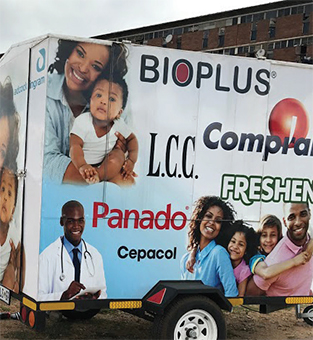
Nature of the Project
The medical male circumcision (MMC) project entails the performance of MMC within the Gauteng province at selected medical sites in the Alexandra township. The project has been in operation since November 2015. Adcock Ingram donated trailers as satellite sites located in and around Alexandra township.
Targeted beneficiaries
Previously disadvantaged males.
Purpose of the project
To provide basic health screening and referral services.
Progress to date
Over 2 200 procedures have been performed to date.
Next Steps
The project is ongoing.
Project Dignity
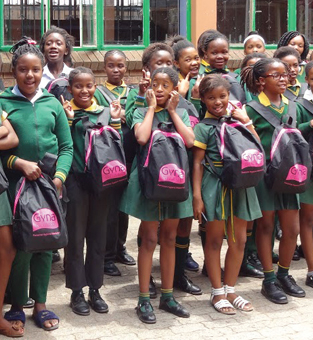
Nature of the Project
Handing out sanitary wear and Gynaguard hampers to the Grade 6 and 7 class of girls from schools in the Alexander Township. This initiative started in December 2017 and was completed in March 2018.
Targeted beneficiaries
Previously disadvantaged females and lower to middle LSM’s.
Purpose of the project
To reduce absenteeism and dropout rates in schools and increase opportunities for girls to complete their education and to empower them through education and access to sanitary wear to reach their full potential.
Progress to date
Created consumer awareness, provided education and recruited new users for our brands.
Next Steps
Exploring various options to assist in ensuring that this initiative is more sustainable.
Bioplus future careers workshops

Nature of the Project
The first workshop was at the OR Tambo Cultural Precinct, Wattville, Benoni in March 2018 and the second workshop was at Orange Farm in May 2018. These workshops involved a career presentation from guest speakers focussed on various careers in the mathematics and science fields.
Targeted beneficiaries
Previously disadvantaged Grade 11 and 12 pupils.
Purpose of the project
To empower the youth with the information they require to make informed career decisions. The event was an information sharing platform designed to assist in the creation of the critical and scarce skills which lead to meaningful and sustainable employment.
Progress to date
The workshops hosted 48 Grade 12 learners from Ephes Mamkeli High School from Wattville township in Benoni and the Orange Farm workshop hosted 150 learners from various schools in the surrounding areas.
Next Steps
Expand the workshops to other schools.
Distribution of CSI